On going a bit viral in 2026
Like many illustrators, I spend a lot of my time alone in my studio, working on ideas and artwork, sometimes for hours, days or weeks at a time. The work I do requires a lot of deep thinking – I notice details, I consider all sorts of options for colour, texture, and composition, and I am spurred on by a desire to do better with each new drawing. I believe that the images I make are worth my attention, for as long as it takes to make them, and that they are worth the attention of my readers, clients and audience, for as long as they are willing to look at them.
And herein lies the problem.
In August 2026, I read in the news that a rocket from one of Elon Musk’s SpaceX missions had collided with the moon, potentially leaving a permanent crater. This news enraged me for what it represented: a lack of care and competence, patriarchal-colonialist-thinking, and a vast waste of resources while our planet suffers under the effects of the climate crisis. So I made some art about it. I didn’t think all that hard, I simply reacted in the most cathartic way I know how.
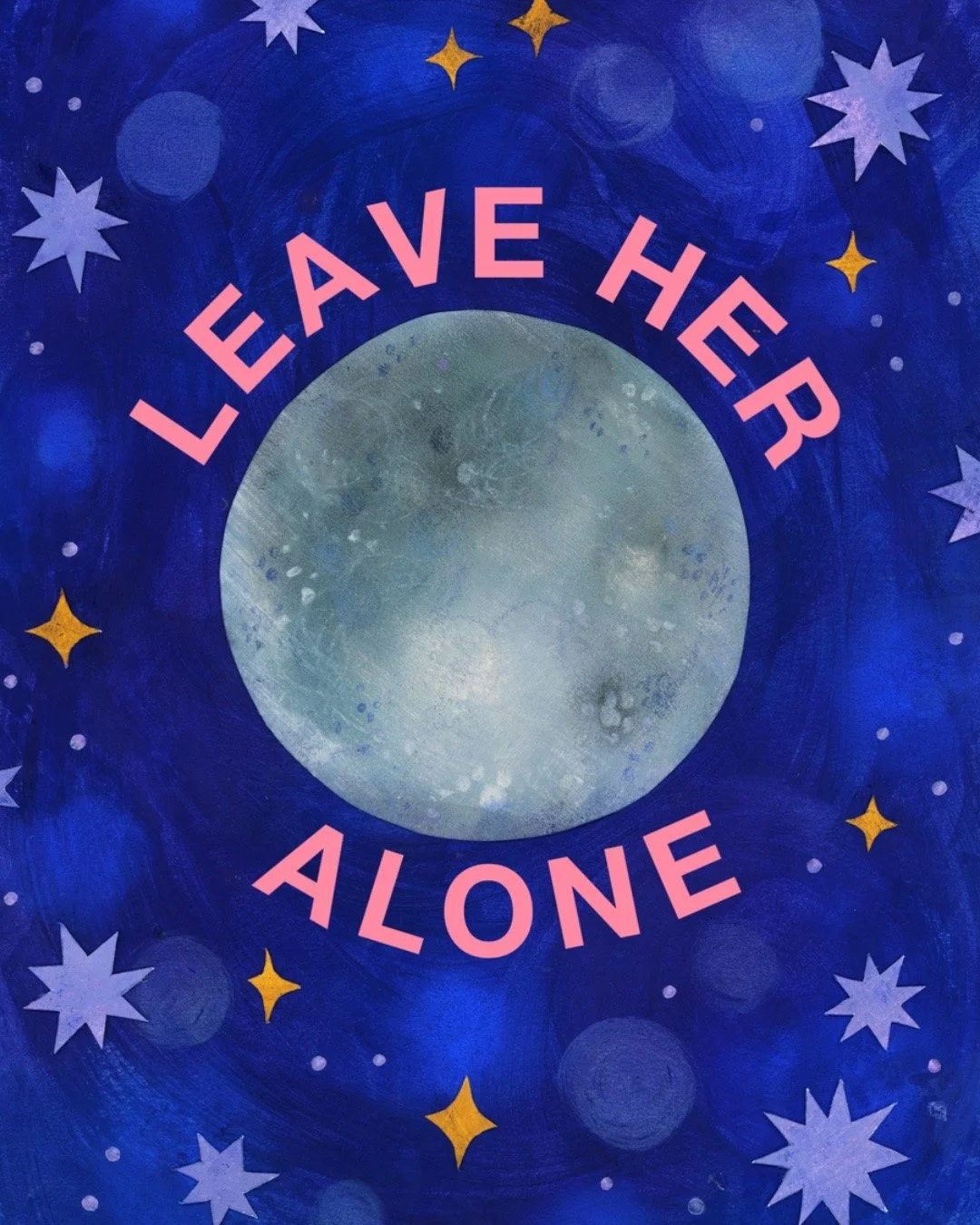
Artwork made with mixed media collage and digital text
Something about the timing and timeliness of the post must have resonated, because within hours the post had gained traction and it currently stands at about 42.2K likes, which is significantly more than any other post I’ve ever shared. I think part of the post’s success was due to the shareable nature – I added different text options for people to vent their frustrations in various ways – but as the numbers grew, I found myself feeling increasingly uncomfortable with this. Sure, it was nice to be connecting with people, and I had many thoughtful, kind responses to the post. But I started to wonder how much people were actually thinking about what I’d made? How many people simply liked, shared, then swiftly forgot? How many people liked it for the illustration itself and how many simply liked it because they hate Elon Musk? Before long I turned off comments because I found myself full of anxiety and responsible for the arguments ensuing under the post.
It feels as if social media has become a bit of a trap for artists and illustrators – on the one hand we’re told that we have to be visible and active to be able to get work, while at the same time the platforms we use encourage surface-level interaction and reduce the attention spans of everyone who uses them. And this feels like the exact opposite of what a good illustration should do, which is to offer readers a chance to slow down, think at their own pace, and build both patience and empathy. Picture books especially feel like they offer a genuine alternative to the excesses of doomscrolling.
Now of course, I know it’s not all bad and I know it is possible to form genuinely lovely connections through platforms like Instagram. But increasingly I wonder whether it is helpful for me to feed in to the attention-economy with my artwork, or if I’m better off deleting the app and throwing myself into a painstakingly slow creative practice somewhere in the woods. I suspect there’s a healthy middle ground. So for now, I am taking a more mindful approach to my social media use: turning off notifications, limiting my time, and posting less regularly but more intentionally. And you can find more in-depth, thoughtful articles about my illustrations, books and process in my newsletter, instead.
